


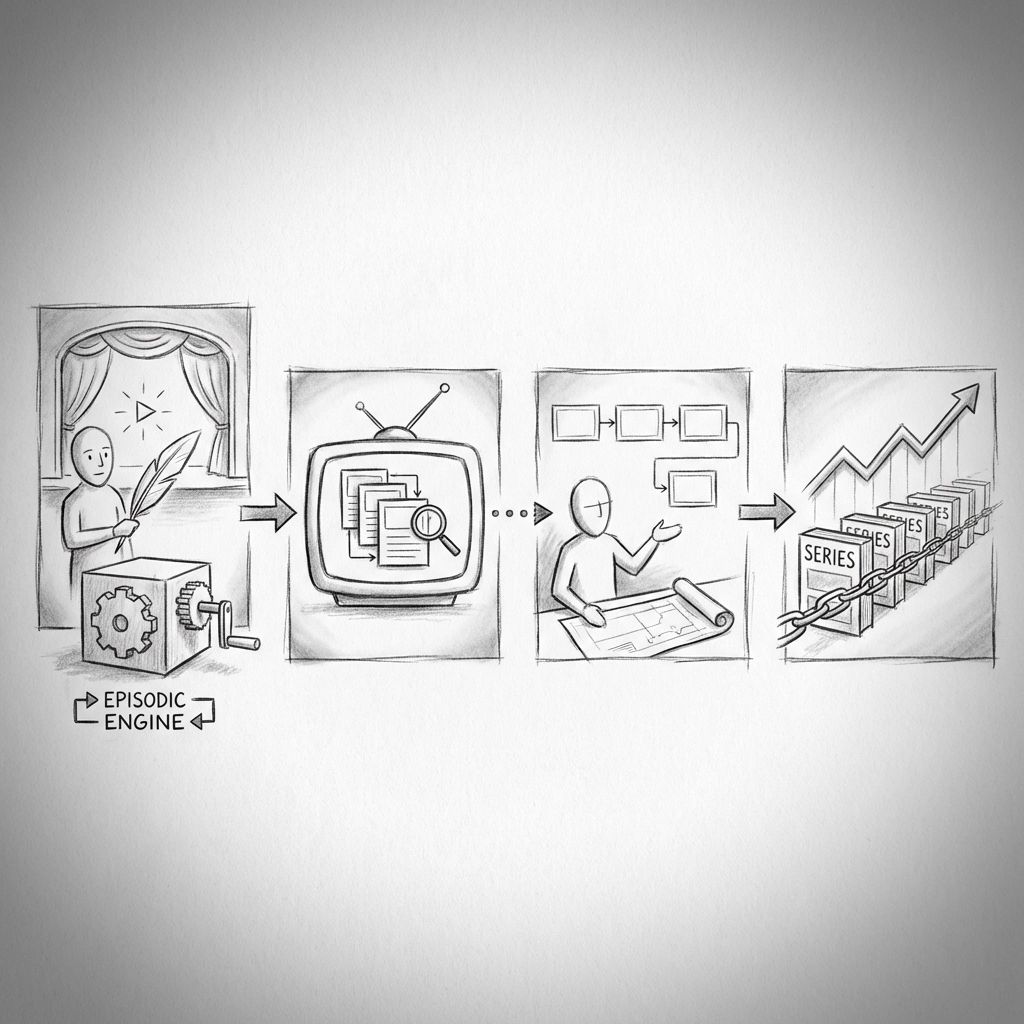
Episodic Engines: TV Structure Tools for Theater Writers (and Anyone Building a Series)
You've got a world. Characters you love. Maybe a sprawling story that refuses to fit into a tidy two-hour play. Or maybe you're a TV writer staring at a pilot that feels… thin. Like it's missing something you can't name.
Here's a secret that crosses disciplines: the structural tools of episodic television and musical theater aren't locked in separate rooms. They're more like cousins who should talk more often.
Whether you're building a limited series, adapting your play for television, or just trying to understand why some stories sustain and others stall, understanding episodic engines will change how you think about narrative. And if you flip it around: borrowing from musical theater's architecture: you might unlock something your TV pilot has been missing all along.
Let's get into it.
What Exactly Is a "Story Engine"?
A story engine is the renewable resource at the center of your series. It's not a single plot. It's the mechanism that generates plots: week after week, episode after episode.
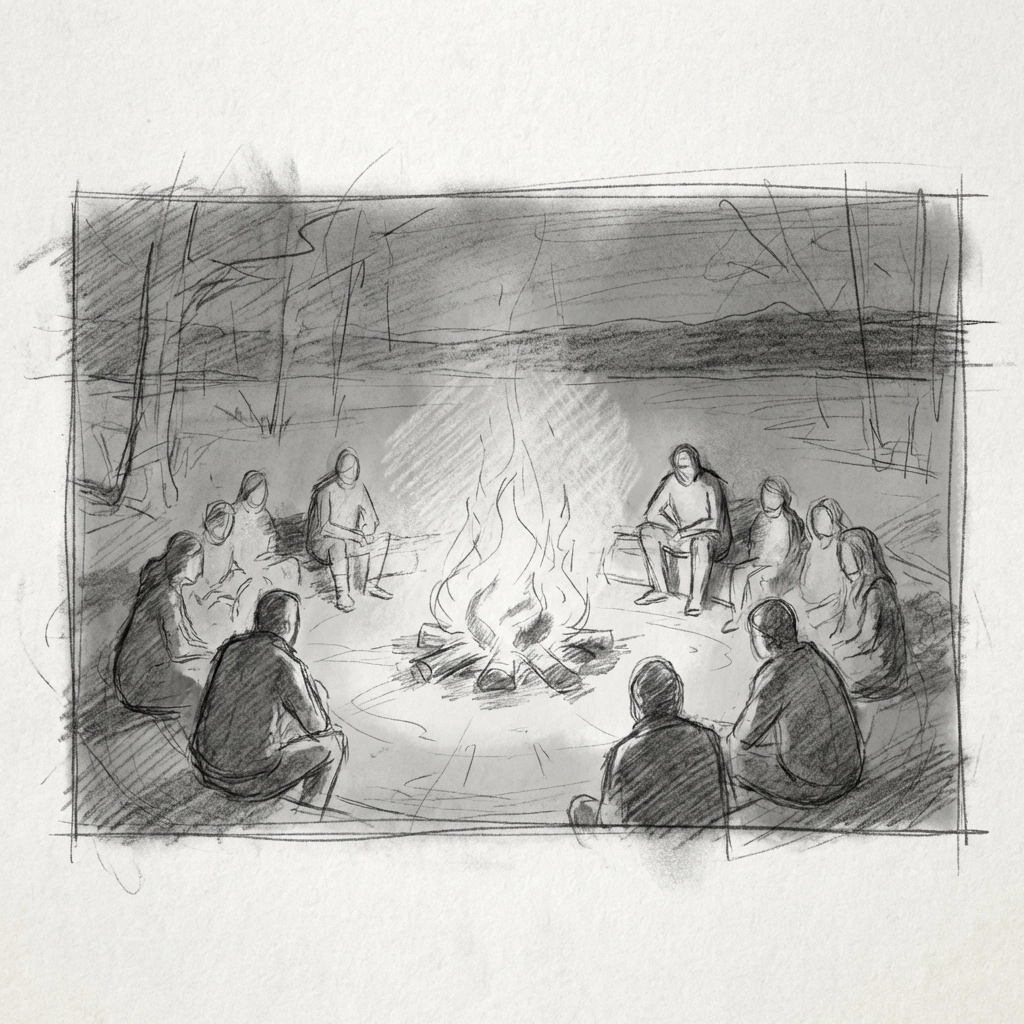
Think of it this way: a movie is a firework. Beautiful, complete, gone. A series is a campfire. You need to keep feeding it, but the fire itself: the heat, the draw, the reason people gather: has to be built into the structure from the start.
A strong story engine encompasses:
- A situation that naturally produces conflict (a homicide unit, a therapy practice, a family restaurant)
- Characters whose desires and flaws create friction
- A world with enough texture to sustain exploration
- Stakes that can escalate without resolving too quickly
Supernatural ran for fifteen seasons on a simple engine: two brothers hunt monsters. That's it. But within that engine, you can tell horror stories, family drama, comedy, mythology, and apocalypse narratives. The engine is the container. The episodes are what you pour into it.
The Anatomy of Episodic Structure
If you're coming from theater, episodic structure might feel foreign at first. Plays tend to be singular experiences: one story, one arc, one catharsis. Episodes are designed to be modular. Each one needs to stand alone while contributing to something larger.
Most hour-long dramas follow a variation of this shape:
Cold Open / Teaser: Hook the audience before the title card. Establish the episode's central problem or question. This is your "I'm not changing the channel" moment.
Act One: Introduce the episode's specific conflict. Your characters encounter the problem that will drive this particular hour.
Act Two: Complicate. Deepen. Misdirect. The initial approach fails, new information emerges, stakes rise.
Act Three: Crisis point. The characters are forced into a corner. Difficult choices become unavoidable.
Act Four: Climax and resolution: but not total resolution. Episodic shows often leave threads dangling. Serialized shows leave more threads dangling.
The key insight for theater writers: episodic structure is not about cramming a three-act play into an hour. It's about building a story that earns its ending quickly while leaving the audience hungry for more.
What Theater Writers Can Steal from TV
Here's where it gets practical. These TV tools translate beautifully to theatrical work: especially if you're writing anything serialized, episodic, or expansive.
1. The A/B Story Split
Most TV episodes run two (or more) storylines simultaneously. The A-story is your main event; the B-story runs underneath, often with secondary characters, often in a different emotional register.
This isn't just about filling time. It's about rhythm and contrast. A tense A-story breathes better when cut against a lighter B-story. And when those stories collide or rhyme at the end, you get resonance.
Theater writers: try building a play with a genuine B-plot that has its own arc. Not a subplot. A second story that's earning its stage time independently.
2. Character Velocity
In TV, characters can't wait around. They need to be moving: wanting something, pursuing it, hitting obstacles: from the jump. Writers talk about "character velocity": how quickly a character's desires become actions become consequences.
High-velocity characters are watchable even when they're wrong. They pull the story forward instead of waiting for the plot to push them.
Ask yourself: in your play or pilot, how many scenes feature your protagonist doing something versus discussing something?
3. The "Episode Test"
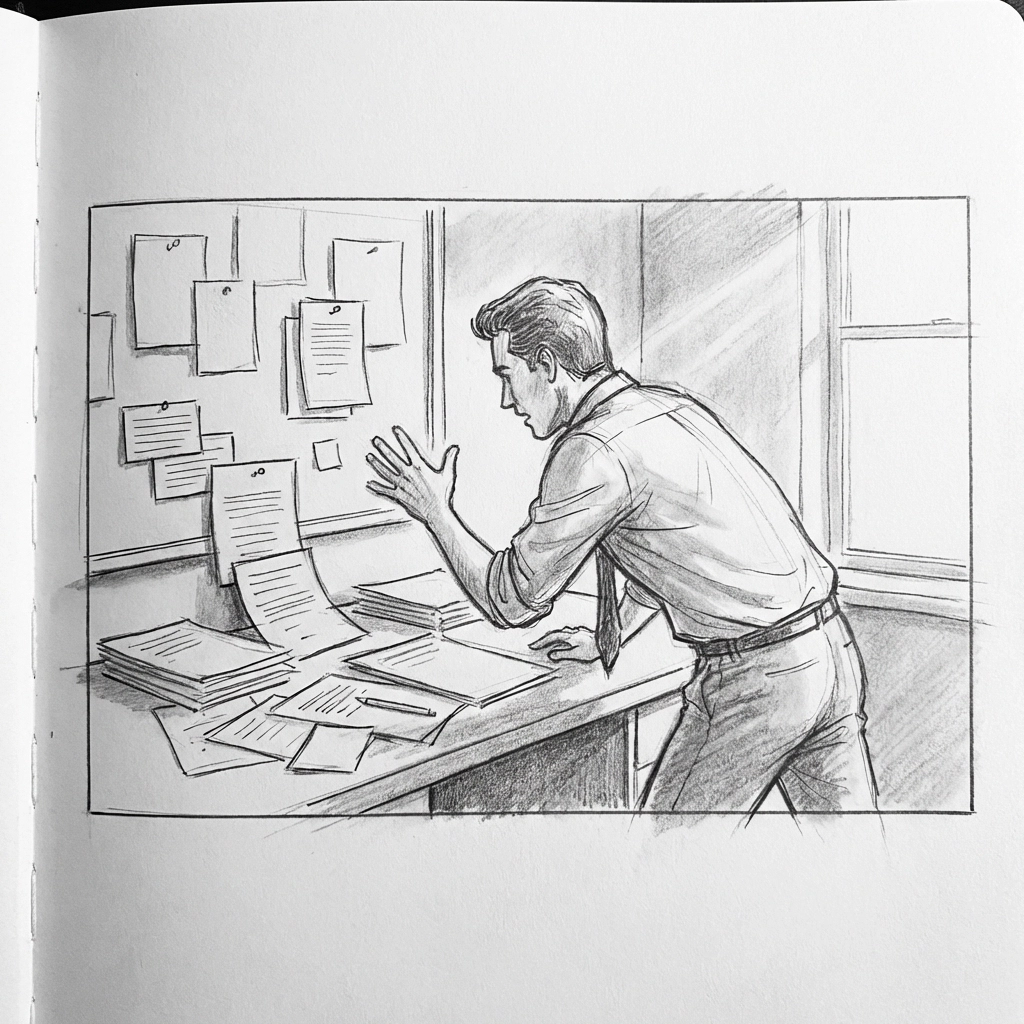
Here's a useful exercise: take your premise and generate five episode ideas in ten minutes. Not detailed outlines: just loglines. "The one where…" statements.
If you can't quickly imagine five distinct stories inside your world, your engine might not be running yet. If you can imagine fifty, you've got something.
This works for plays too. If your play's world could sustain other stories: other characters, other days, other crises: that's a sign of richness. Even if you only tell one story, the sense that more exists makes your world feel alive.
4. The Modular Scene
TV writers think in scenes that can be moved, cut, or restructured late in the process. This isn't because TV is sloppy: it's because production realities demand flexibility.
Theatrical writers can benefit from building scenes that are self-contained units with clear entrances, goals, and exits. Scenes that know what they're about are easier to diagnose when something isn't working.
Now Flip It: What Musical Theater Can Teach TV Writers
Here's where it gets interesting. Musical theater has structural tools that TV writers rarely use: but probably should.
The "I Want" Song as Pilot Architecture
In musical theater, the protagonist typically gets an "I Want" song early: a number that crystallizes their core desire and establishes the emotional engine of the whole show. "Part of Your World." "Corner of the Sky." "The Wizard and I."
Most TV pilots bury their protagonist's want. It's implied. It's spread across scenes. It's explained in dialogue rather than demonstrated with urgency.
What if you wrote your pilot like a musical? What's your protagonist's "I Want" moment? Not a monologue: but a scene so clear about desire that it functions like a song. Something the audience can hum after they leave.
The 11 O'Clock Number as Season Climax
Musical theater has a term for the big, show-stopping moment near the end: the 11 o'clock number. It's where everything comes to a head emotionally. The character confronts their deepest truth. The audience gets what they've been waiting for.
TV seasons often build to plot climaxes: revelations, battles, twists. But the emotional climax? Sometimes it gets lost in the machinery.
Try mapping your season finale like a musical's second act. Where is your 11 o'clock number? What truth does your protagonist finally confront: not plot-wise, but soul-wise?
Reprises as Emotional Continuity
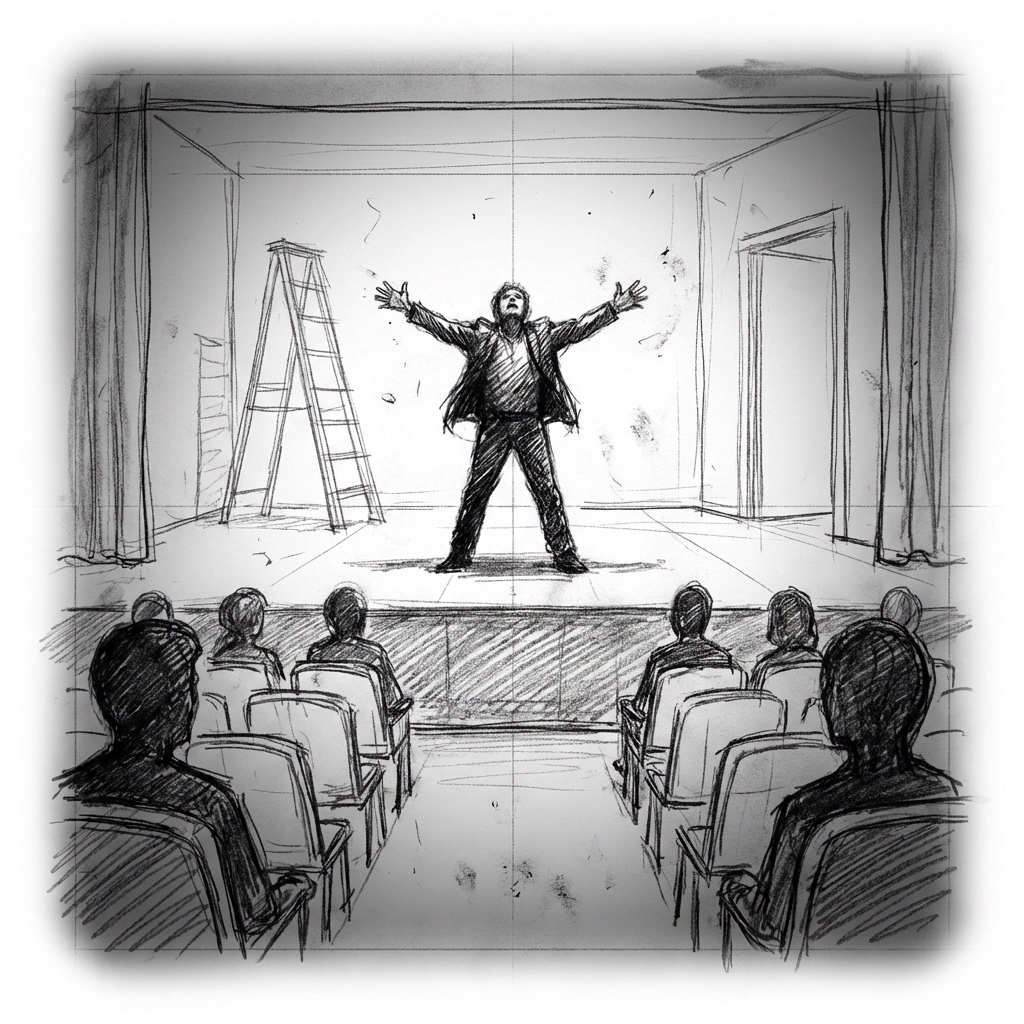
Musicals use reprises: returning to earlier melodies with new context: to create emotional continuity. The same tune hits differently when the character has changed.
TV can do this with visual motifs, repeated dialogue, or callback scenes. But it's often underused. Think about what you could "reprise" in your series. What image, phrase, or moment could return transformed?
Ensemble as Engine
Musical theater excels at using ensemble: not just as background, but as a structural element. The community comments, challenges, celebrates. The protagonist exists in relationship to a world.
TV often isolates protagonists. Even ensemble shows tend to silo characters into their own storylines. What if you let your world push back more? Let the community be a character?
A Quick Diagnostic
Whether you're writing for stage or screen, ask yourself:
- Can I state my story engine in one sentence?
- Do my characters have velocity: or are they waiting for plot?
- Can I imagine five more episodes/stories in this world?
- Where is my "I Want" moment?
- What would I reprise?
You don't need to answer all of these. But if you're stuck, one of them will probably point to where the problem lives.
The best part of working across forms is that you stop seeing structure as a set of rules and start seeing it as a set of options. TV structure isn't better than theatrical structure. Musical theater isn't a cheat code for emotional impact. They're different tools built for different problems.
But when you know what's in the toolbox, you can reach for exactly what your story needs( regardless of where you learned it.)
Leave a Reply