



Notes 2.0: Stop Defending Your Thesis and Start Joining the Room
You know that feeling when you're sitting in a development room and someone asks you a question about your script, and your shoulders immediately tense up? That split-second where your brain goes into defense mode, preparing to justify every choice you made? Yeah, that one.
That's the PhD thesis defense dynamic. And it's killing your work.
The Judging Dynamic (And Why It Sucks)
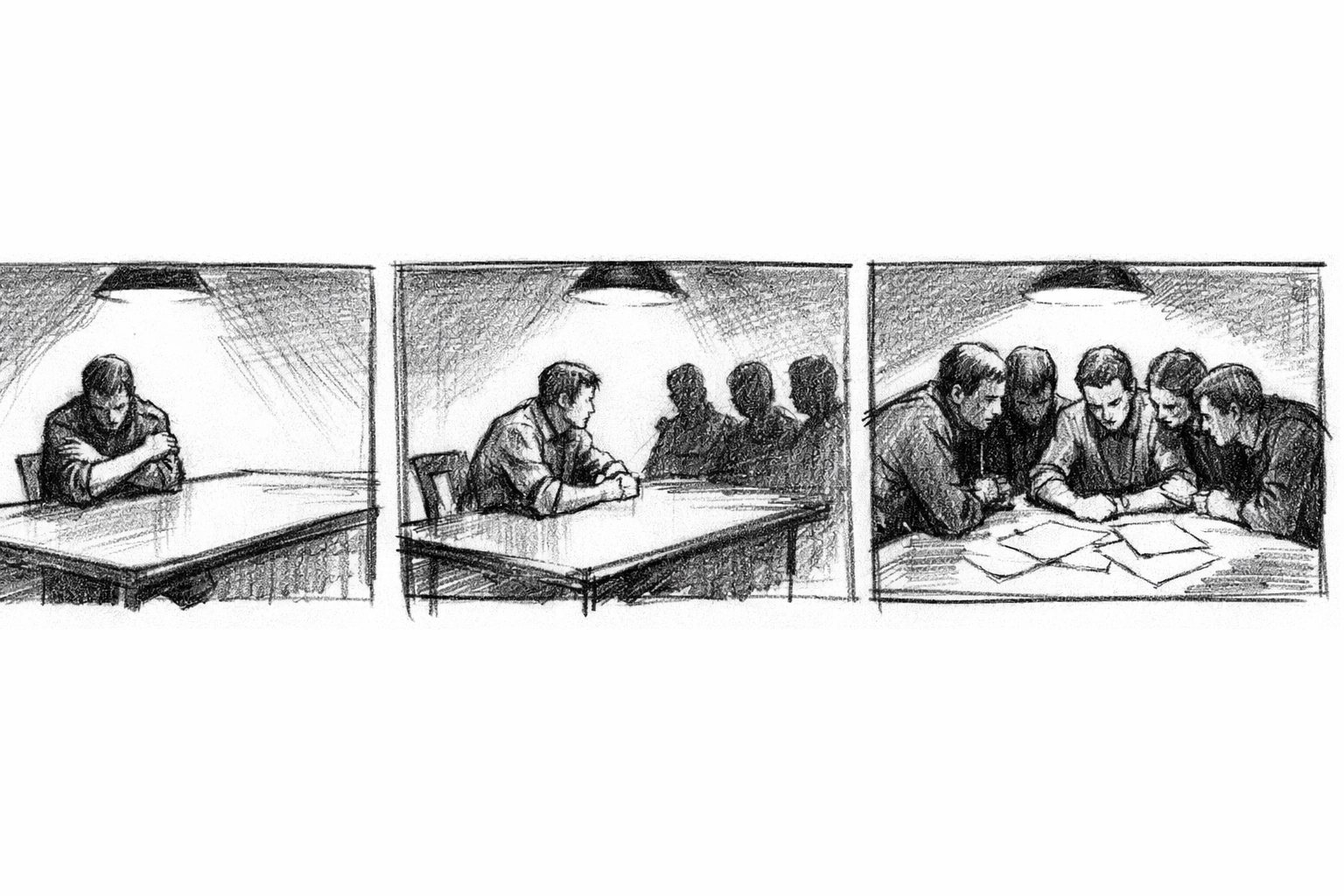
Here's what happens in a traditional notes session: You present your work. People in the room ask questions. You explain your choices. They push back. You defend harder. They look skeptical. You start sweating. Someone says, "I'm just not sure the audience will understand why she does that in Act Two." You launch into a five-minute explanation about your protagonist's childhood trauma and how it clearly motivates that decision.
Congratulations, you just spent five minutes proving you're smart instead of five minutes making your work better.
This is the judging dynamic, and it's everywhere. It's baked into how we were taught to present creative work, from classroom critiques to pitch meetings. The person with the work is on one side of the table. The people with opinions are on the other. And everyone's playing a weird game where the artist tries to prove their work is already perfect, and the room tries to find the holes.
It's exhausting. It's unproductive. And most importantly, it doesn't actually help you make innovative work.
The Joining Dynamic (Where the Magic Happens)
Now imagine a different room. Someone asks that same question: "I'm not sure why she does that in Act Two." But instead of defending, you say, "Yeah, I'm wrestling with that too. What if we tried…"
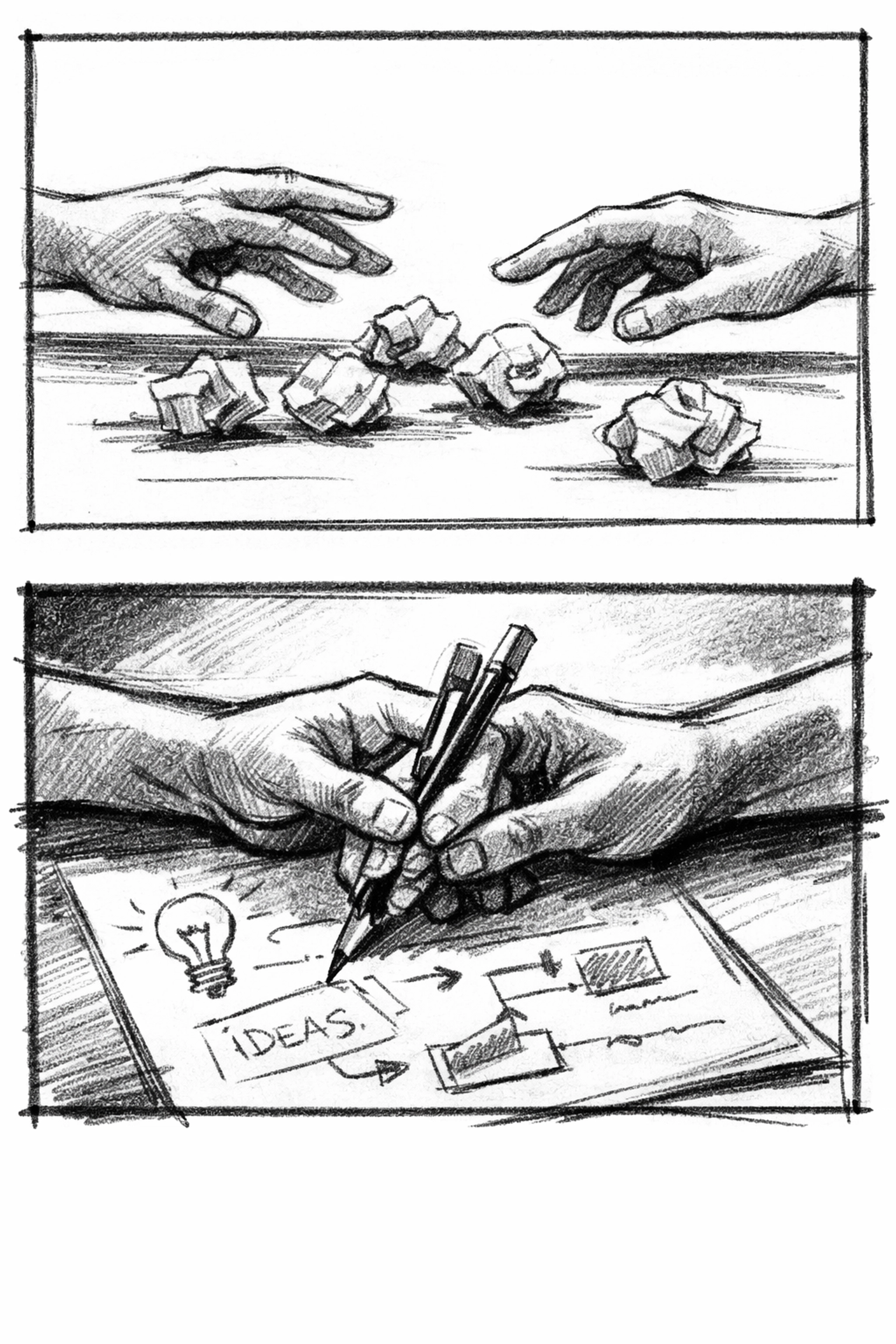
Suddenly, the person who asked the question isn't your opponent. They're your collaborator. Their brain is now working with yours to solve the problem. And here's the kicker: they're probably going to come up with an idea you never would have thought of on your own.
This is what we mean by the joining dynamic. And it's not just a nice way to make the room feel warmer (though it does that too). It's actually the secret ingredient for creating genuinely surprising, innovative work.
"The key to creating really, really innovative work is moving from a judging dynamic to a joining dynamic… All of the resource creation that goes into creating solutions to your dramatic problems is everyone else's problem now, not just yours."
Read that again. All of the resource creation. Not just some. Not just the easy stuff. All of it. Every single person in that room is now lending their brain, their experience, their weird knowledge about that documentary they watched at 2am, their cousin who worked in a funeral home: all of it becomes available to your project.
What This Actually Looks Like
Let's get practical. Here's what shifts when you move from judging to joining:
Instead of: "That moment works because of the thematic resonance with the opening scene."
Try: "I'm trying to create an echo of the opening scene there, but I'm not sure it's landing. Does it feel like a callback to you, or does it just feel random?"
See the difference? The first one closes the door. The second one opens it.
Instead of: "The character has to make that choice because of her backstory."
Try: "I need her to make a choice here that feels both surprising and inevitable. Right now I have her doing X, but I'm wondering if there's something bolder."
One version puts you in a defensive crouch. The other invites people to get creative with you.
Why This Is So Hard (And Why It's Worth It)
Let's be real: Making this shift is terrifying. Because when you stop defending your work, you have to actually be vulnerable about what isn't working yet. You have to admit that you don't have all the answers. You have to trust that the room will help you rather than judge you.
And in a lot of rooms, historically, that trust hasn't been earned.
But here's the thing: when you create a culture where joining is the norm, where everyone understands that their job is to help solve problems rather than to prove they're the smartest person in the room, something incredible happens. The work gets weird in the best possible way. It gets more specific, more daring, more itself.
Because you're not just pulling from your own brain anymore. You're pulling from everyone's brain. And that collective intelligence creates solutions that none of you would have found alone.
The Practical Shift: Questions Instead of Statements
One of the easiest ways to facilitate the joining dynamic is to change how you respond to notes. Instead of explaining or defending, ask questions:
- "What would need to change for that moment to land for you?"
- "If you were writing this scene, what would you try?"
- "What's the version of this that excites you?"
Notice how these questions make the other person actually engage with solving the problem rather than just identifying it? That's the joining dynamic in action. You're literally inviting them to join you in the work.

When to Still Hold Your Ground
Now, before anyone gets the wrong idea: The joining dynamic doesn't mean you have to take every note. It doesn't mean you lose authorship of your work. It doesn't mean the room suddenly becomes a democracy where everyone gets a vote.
You're still the artist. You still get final say.
But here's the nuance: When you're in a joining dynamic, you're less likely to dismiss good ideas just because they feel like criticism. You're less likely to cling to something that isn't working just because you've already invested time in it. You're more open, more flexible, more able to see possibilities.
And when you do decide to hold your ground on something, people are more likely to trust that you're doing it for the right reasons: because you've demonstrated that you're genuinely open to collaboration everywhere else.
What This Looks Like at The Orchard Project
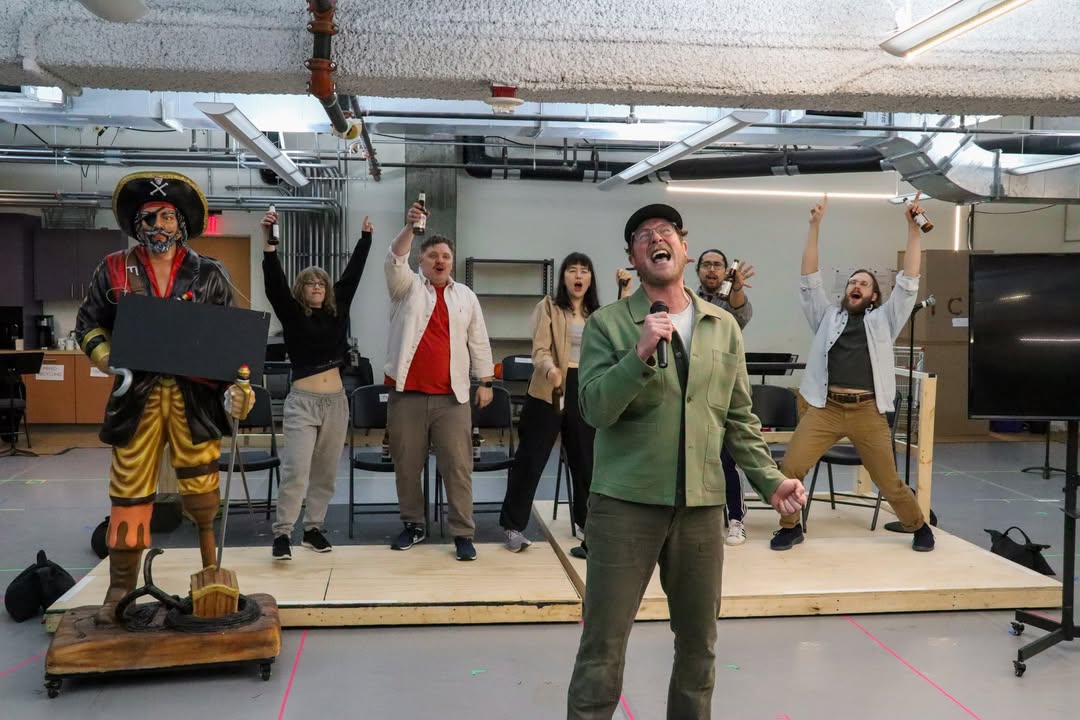
This philosophy is baked into how we approach artist support in our development labs. We're not here to judge whether your work is "good enough." We're here to join you in making it as bold and specific and surprising as it can possibly be.
That means creating rooms where vulnerability is expected and valued. Where admitting you're stuck on something isn't seen as weakness: it's seen as the necessary first step to finding a breakthrough. Where the director, the dramaturg, the sound designer, the person who happened to wander in to use the bathroom: everyone's brain is potentially useful.
Because innovation doesn't come from proving you're right. It comes from being curious enough to discover something you didn't know was possible.
Your Homework (If You're Into That Kind of Thing)
Next time you're in a room getting notes: whether it's a formal development session or just coffee with a friend who read your script: try this:
Count how many times you say "because" or "but" or "actually." Those are defense words. They're the linguistic equivalent of crossing your arms.
Then try replacing them with questions. "What if…" or "How might we…" or "I'm curious what you think about…"
Notice what happens. Notice how the energy shifts. Notice whether you end the conversation with more ideas than you started with, or just more proof that you were already right.
The thesis defense dynamic wants you to be right.
The joining dynamic wants you to make something incredible.
Choose the second one. Your work will thank you.
Leave a Reply