


What You Can’t Measure (But Actually Matters)
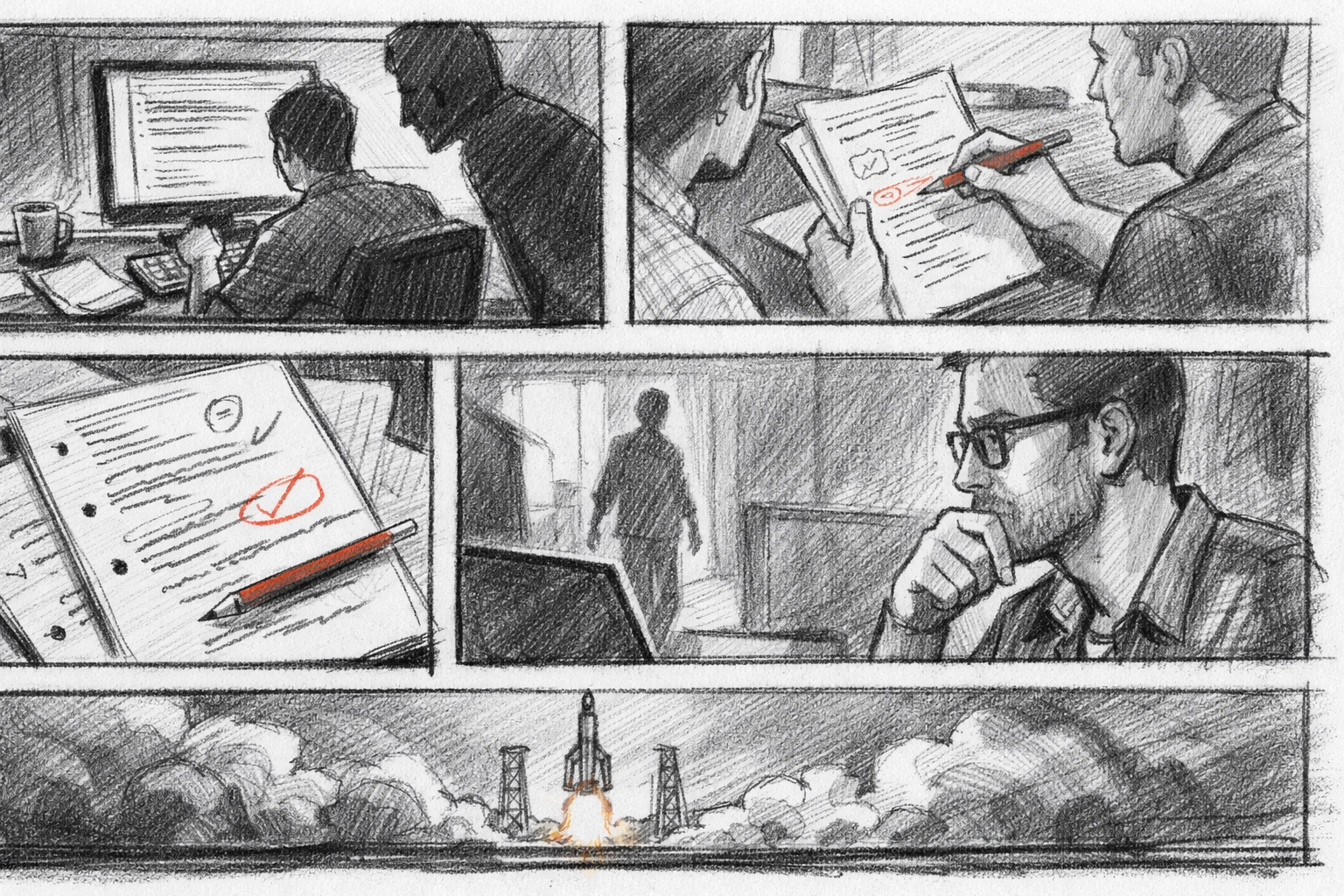
We’ve been in these rooms for a long time.
Rooms where a piece is halfway between what it was and what it might become. Rooms where everyone is a little tired, a little uncertain, and still showing up. Rooms where something shifts—and you can feel it—but you wouldn’t know how to explain it in a report.
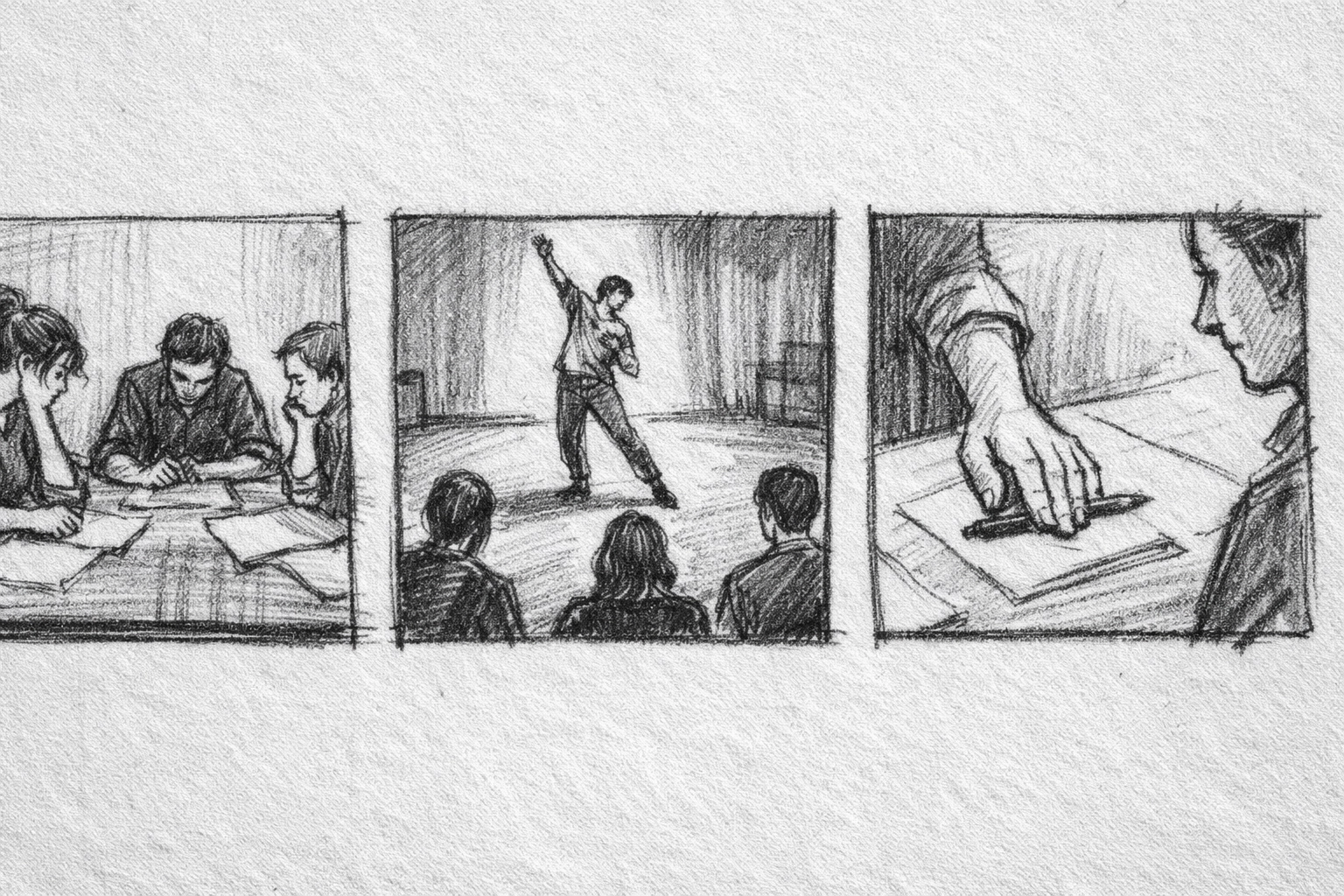
Reading Emil Kang’s “Measuring What Matters” hit a nerve for a simple reason: it names a tension that anyone working on new work already knows.
The most important things don’t happen at the end.
They happen in the middle.
And the middle is hard to measure.
The Problem With Looking Only at Outcomes
There’s nothing wrong with wanting to understand impact. Of course we care where projects go—what gets produced, who reaches an audience, what has a life beyond the room.
But if that’s the only place you look, you miss the actual work.
Because development isn’t just a pipeline to a product. It’s a process where the thing itself is still being discovered. And that discovery is rarely neat, linear, or easy to summarize.
The biggest shifts often look like this:
- A writer realizing the piece they thought they were making isn’t the piece at all
- A team letting go of a “smart” idea because it’s getting in the way of something truer
- A conversation that unlocks a problem no one could name the day before
- A draft that gets messier before it gets better
None of that shows up cleanly in a spreadsheet. But that is the work.
What We Actually Pay Attention To
When you’re sitting in a room with artists in process, you start to notice a different set of signals.
Not: Is this ready?
But: Is this getting closer to itself?
We pay attention to things like:
- Is the work becoming more specific?
- Are the collaborators actually listening to each other?
- Is someone taking a real risk, instead of protecting what they already know how to do?
- Did something shift today that wasn’t possible yesterday?
Progress doesn’t always look like forward motion. Sometimes it looks like starting over. Sometimes it looks like admitting you don’t know.
Those moments are not setbacks. They’re often the turning points.
The Relief of Not Having to Pretend
One of the quietest but most important things that can happen in a development space is this:
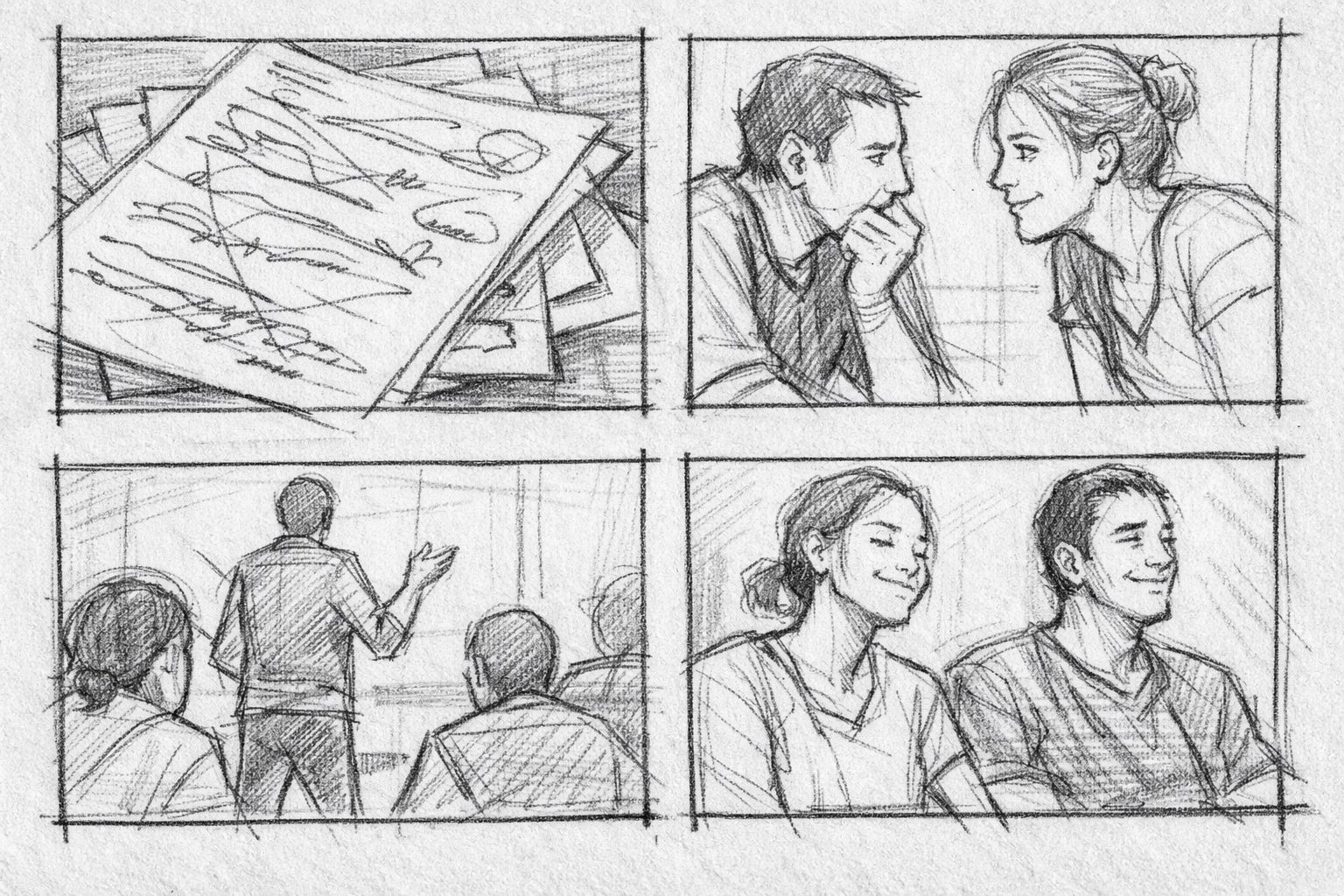
Someone stops pretending they have it all figured out.
Because so many systems—funding, producing, pitching—ask artists to present certainty. To describe the work as if it already exists in its final form.
But that’s not how it actually works.
When you remove that pressure, something opens up. People can say, “I’m not sure yet.” They can follow a question instead of defending an answer. And that’s usually where the real progress begins.
The Shape of Process
If you zoom out, the process of making new work doesn’t look like a straight line.
It loops. It doubles back. It circles the same problem from different angles until something clicks.
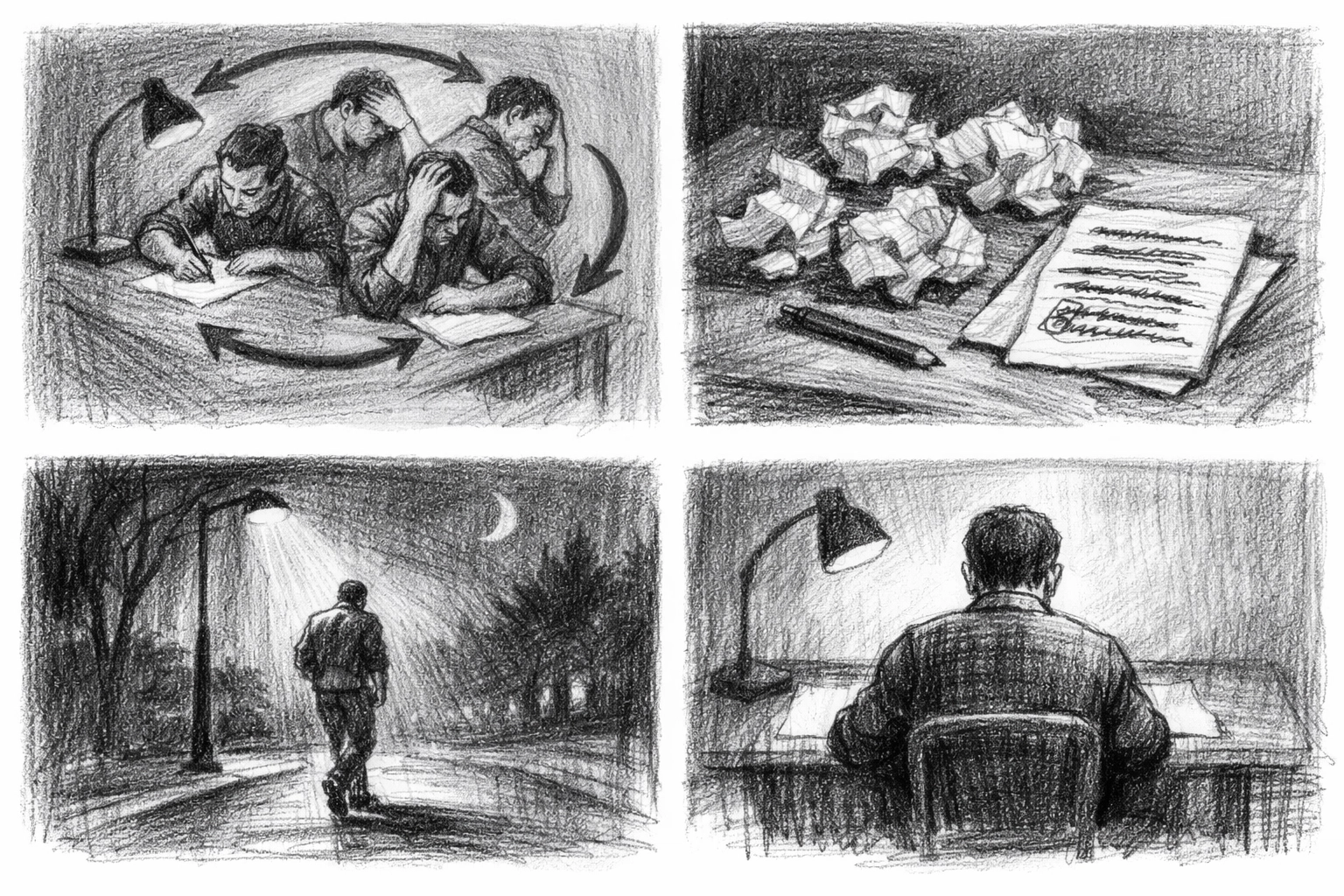
It looks like:
- Trying something that fails, but teaches you what the piece isn’t
- Rewriting the same moment multiple times until it finally lands
- Taking a walk, coming back, and realizing the solution was simpler than you thought
- Letting the form change because the content demands it
From the outside, it can look inefficient. From the inside, it’s the only way through.
Accountability, But Not the Kind You Think
None of this means “anything goes.”
There’s rigor in this work. But it’s not about checking boxes—it’s about staying honest.
- Are you actually listening to what the piece is asking for?
- Are you willing to let go of what isn’t working?
- Are you pushing yourself past the safe version of the idea?
That kind of accountability doesn’t always produce immediate results. But it’s what allows the work to eventually meet an audience in a meaningful way.
The Part That Sticks With Us
There’s a moment that happens sometimes, late in a process.
Someone says, very calmly, “I think we need to cut the first twenty pages.”
And instead of panic, there’s recognition. Because everyone can feel it: that’s the move that gets the piece closer.
Nothing about that moment is measurable in a traditional sense. But it’s the result of days—or weeks—of real work.
That’s what Kang’s piece gets right.
The rigor isn’t in how we describe the work afterward.
It’s in how seriously we take the process while we’re in it.
So What Does That Mean?
It doesn’t mean we stop caring about outcomes.
It means we widen the lens.
If we want to understand what actually supports artists—and what leads to meaningful work—we have to value what happens before the result is visible.
The questions.
The pivots.
The risks.
The moments when something finally clicks.
That’s where the work lives.
And if we don’t find ways to recognize that, we’re only telling part of the story.
Leave a Reply